The story
A real engineering model you put together yourself
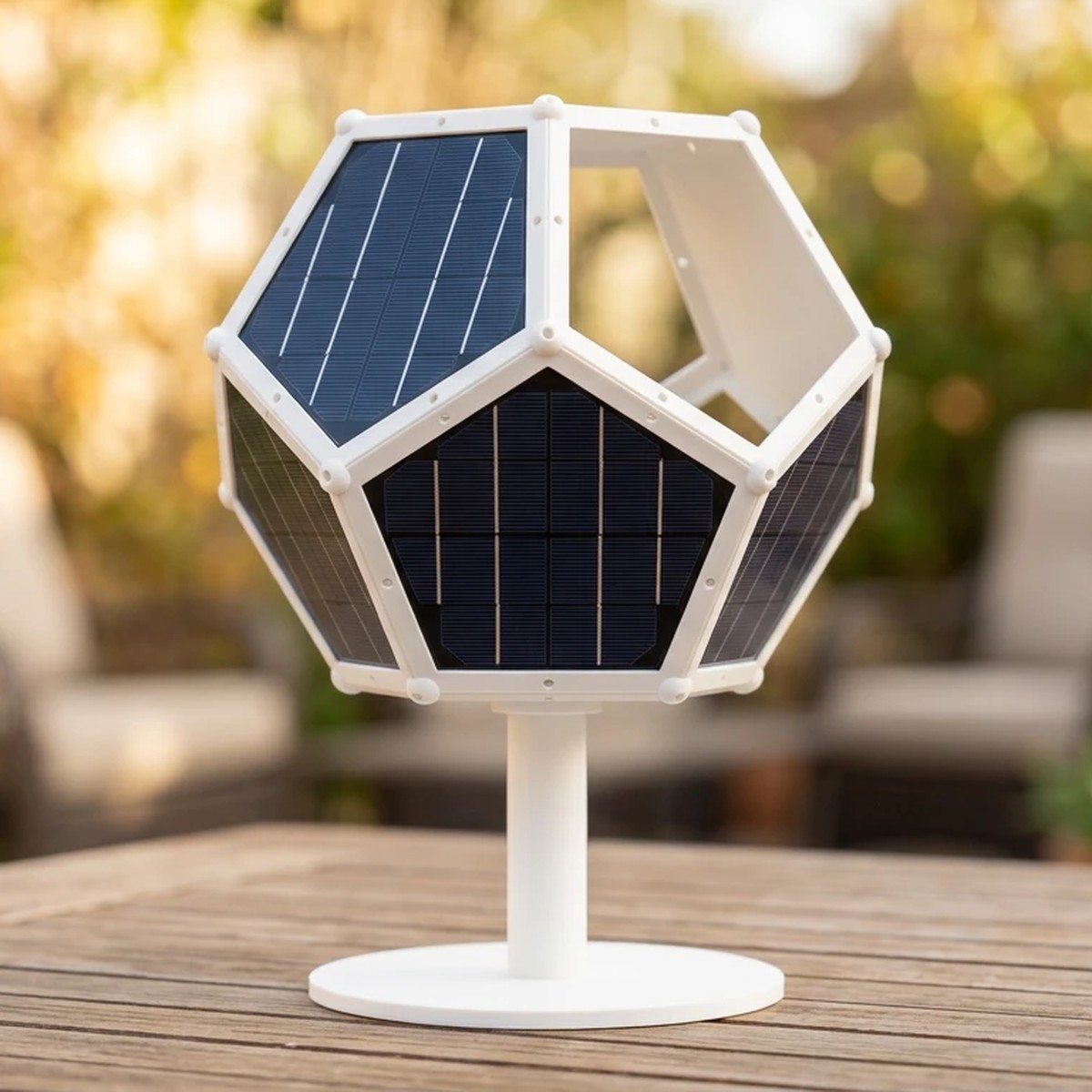
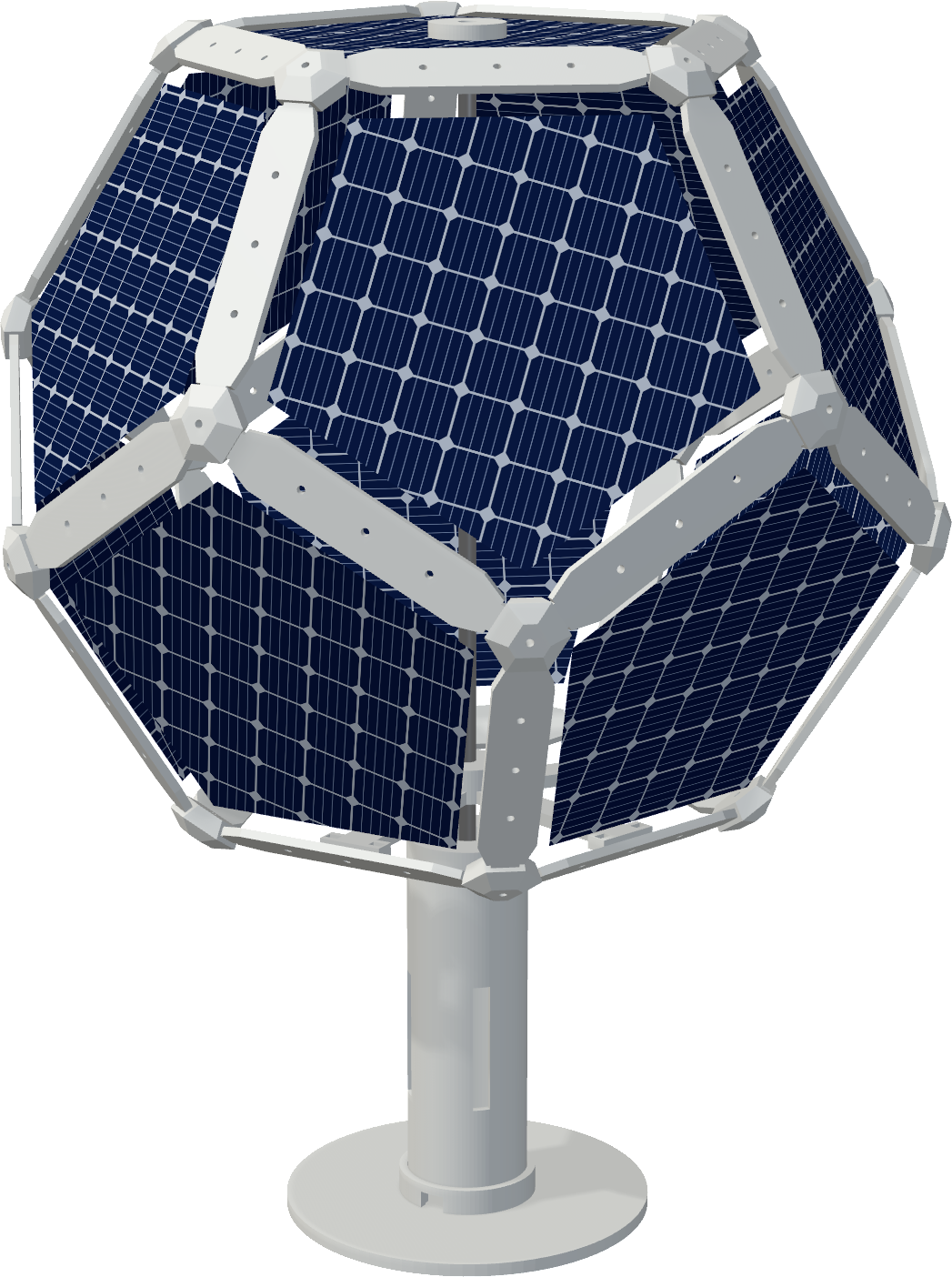
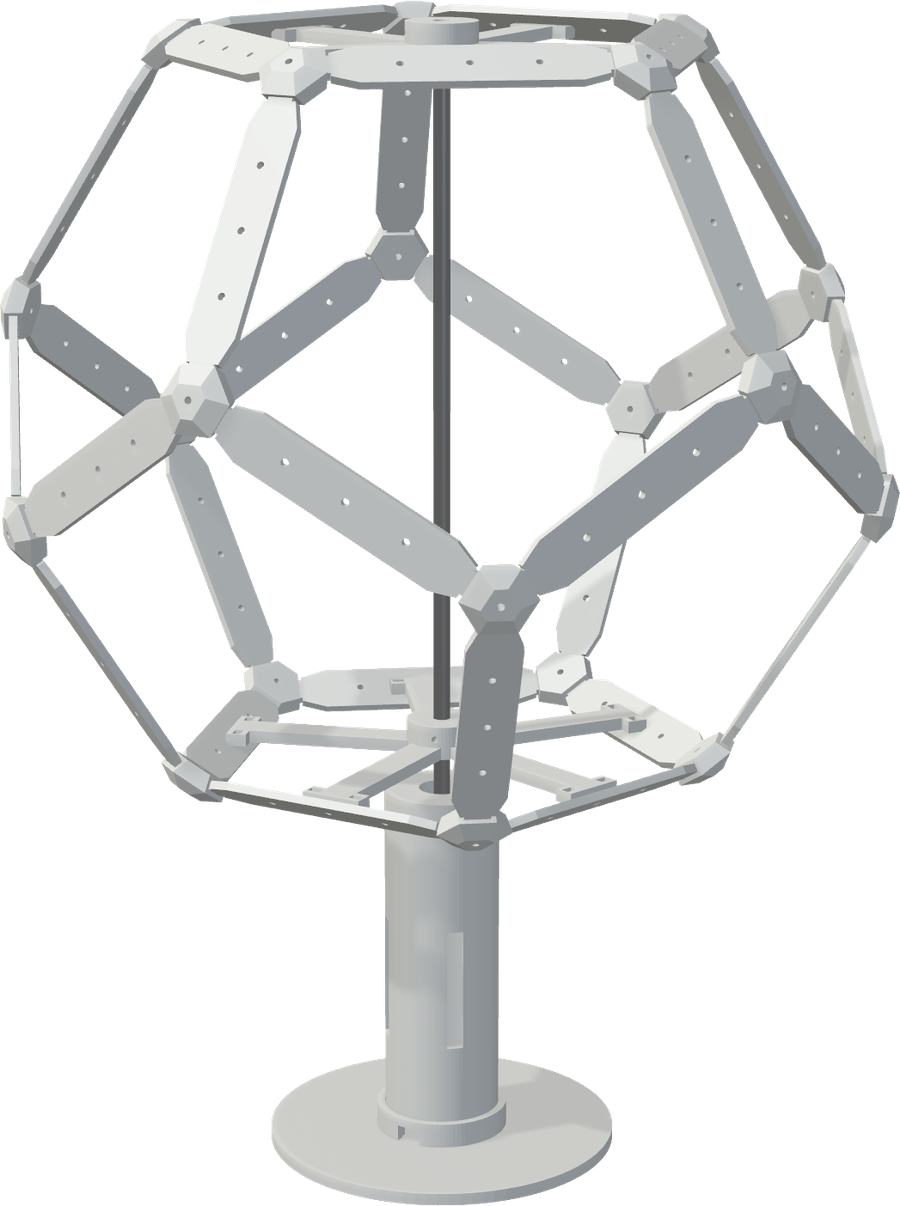
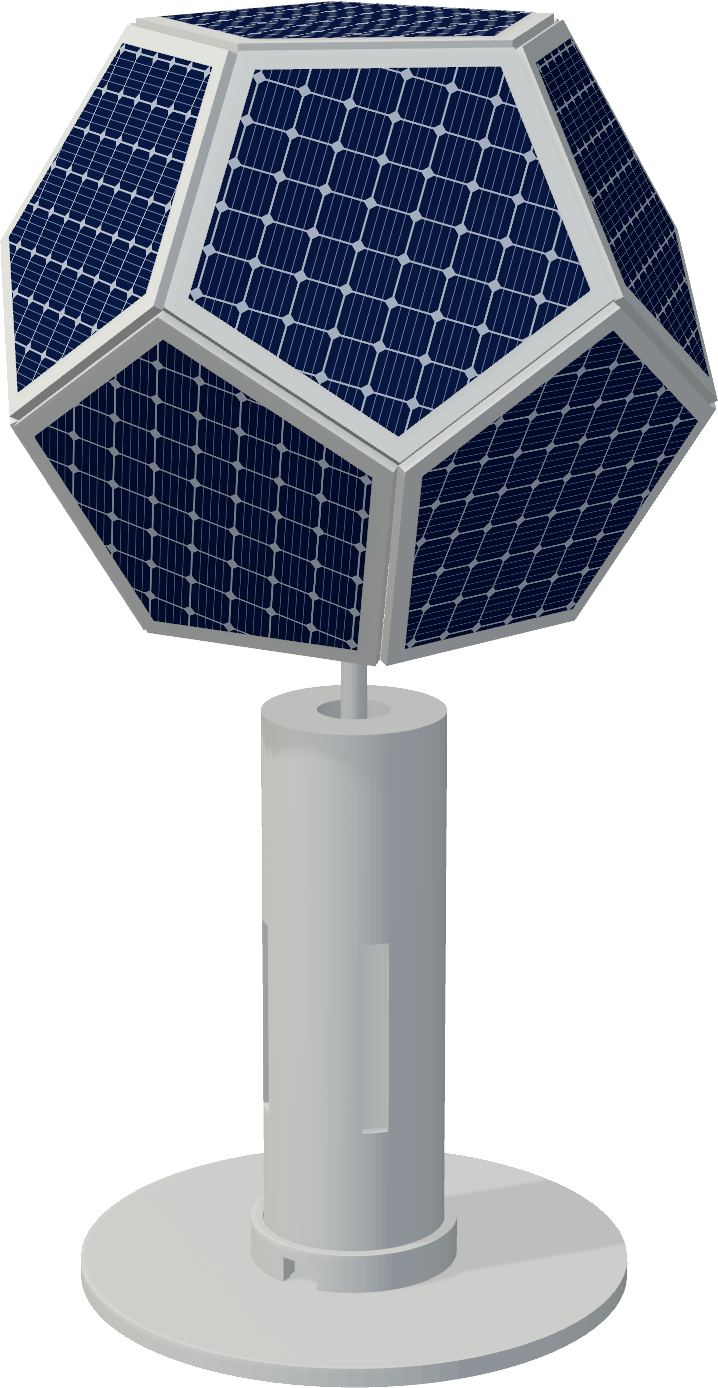
The Solar Dandelion is a dodecahedron: twelve pentagon faces that close into a ball. Eleven of them carry a solar panel, so whichever way the sun moves, some faces are always looking at it. Inside sits the electronics that charges a battery and powers small devices over USB.
We print every frame ourselves, fit and test the electronics, and pack it as a part-built kit. You do the satisfying part: snap the frame together, plug in the panels, and run the experiments.
1
Snap it together
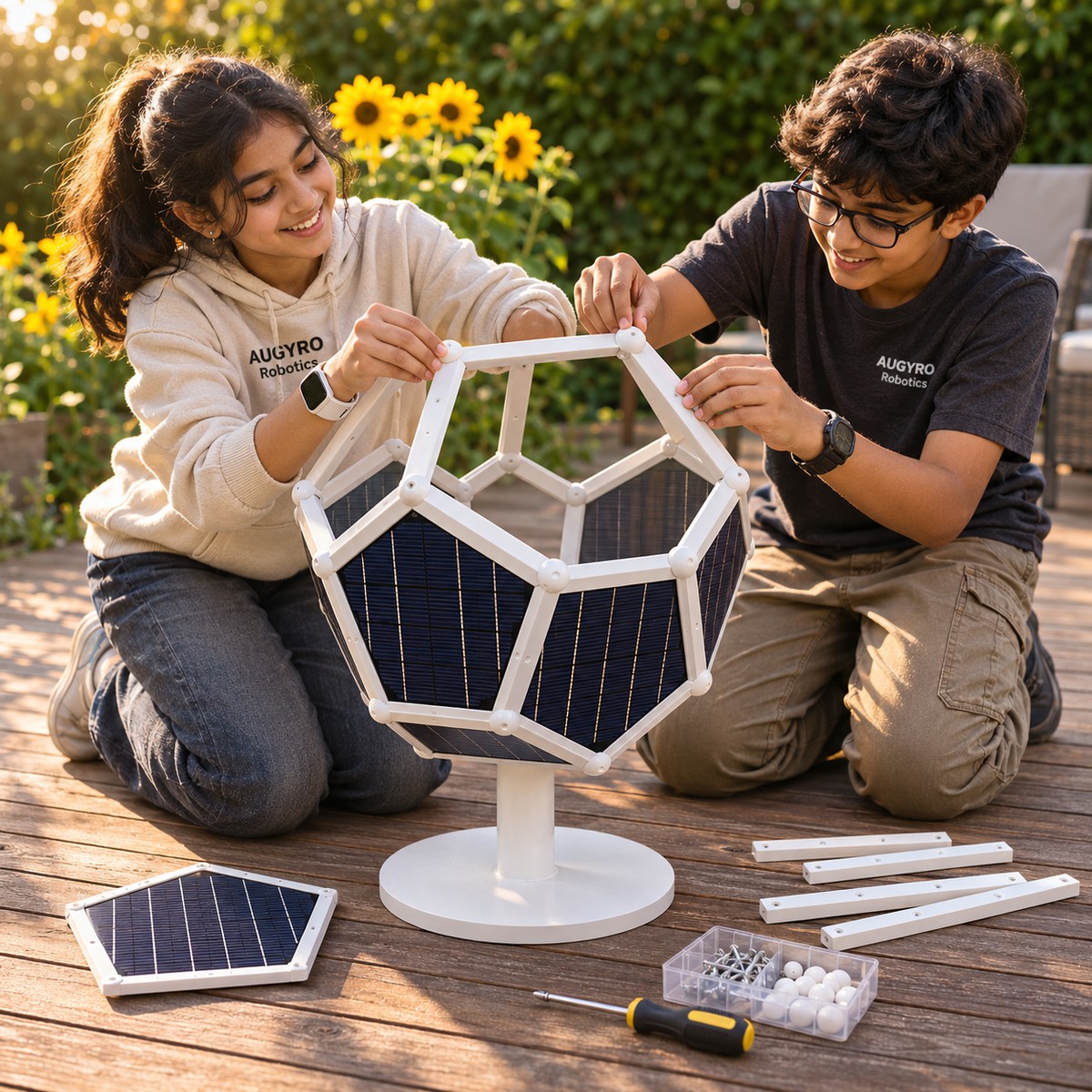
Strips plug into corner pieces, one pentagon at a time, until twelve faces close.
2
Catch the sun
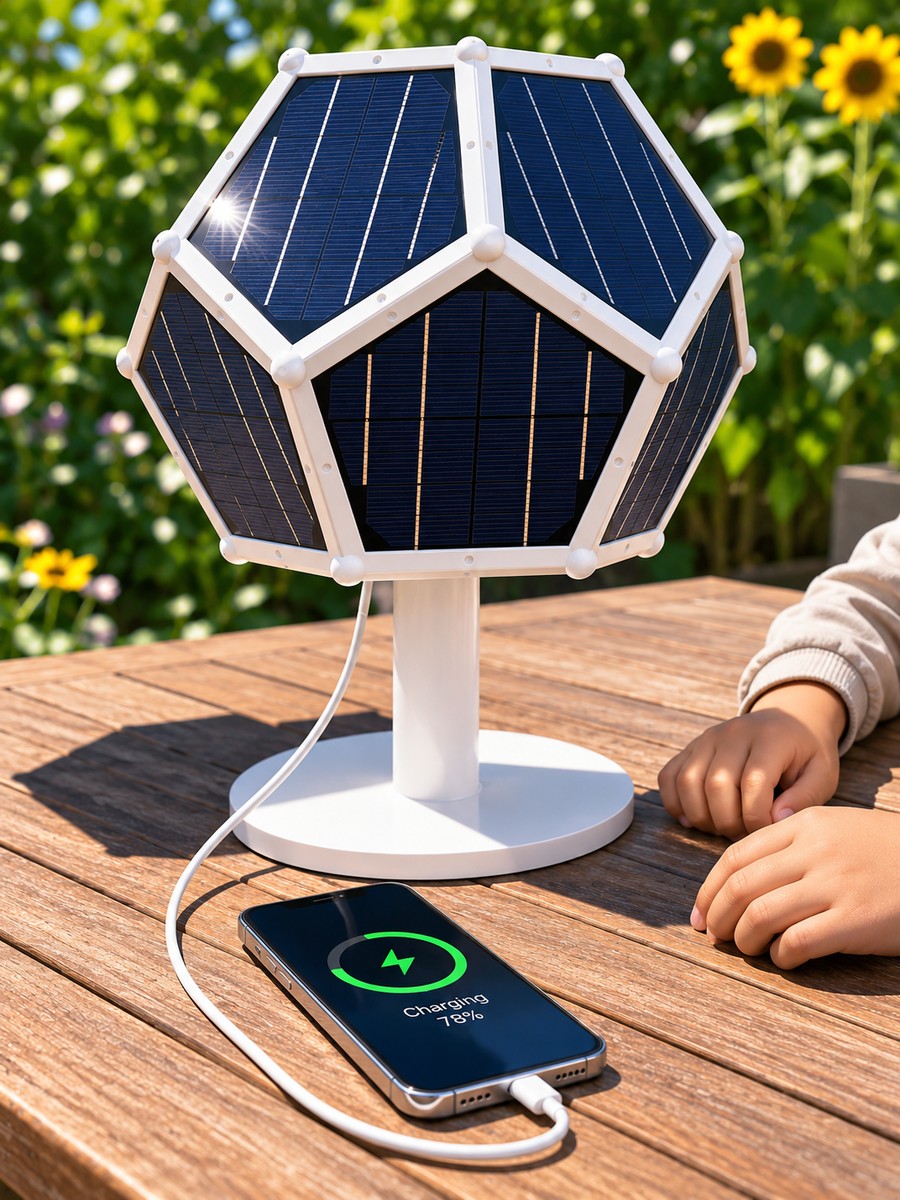
Fit a panel to each face and plug it in. Put it in the sun and watch it charge.
3
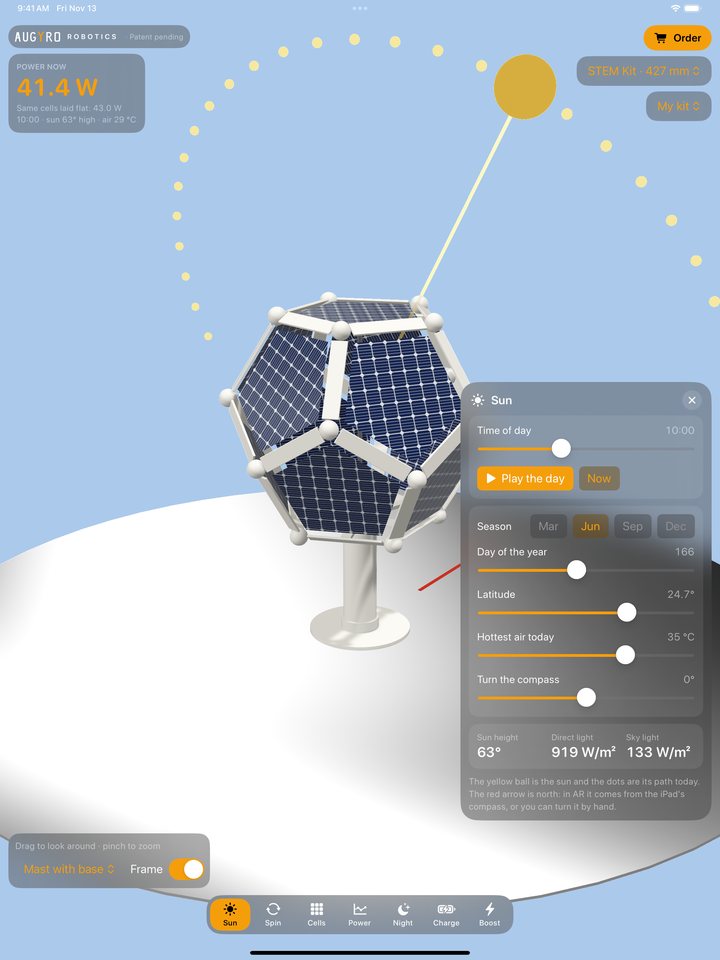
Run the experiments
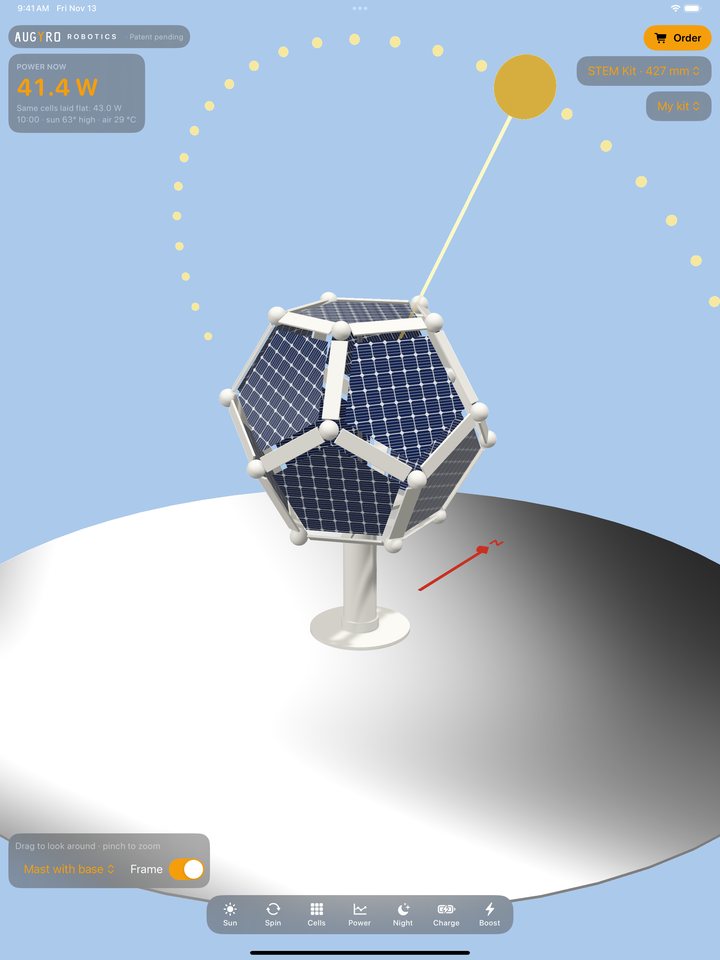
Point your iPad at it. The app finds the model and draws the science on top.
In the box
Part-built, so the fiddly work is already done
The electronics arrive wired and tested. No soldering. The printed manual walks you through the build one pentagon at a time.
- 30 frame strips and 20 corner pieces
- 2 spindle hubs so the flower can turn
- 11 solar panels, one for every face but the base
- Charging electronics, wired and tested
- Printed build manual
- Solar Dandelion AR app for iPad
- Sun-proof outdoor plastic that will not soften or fade
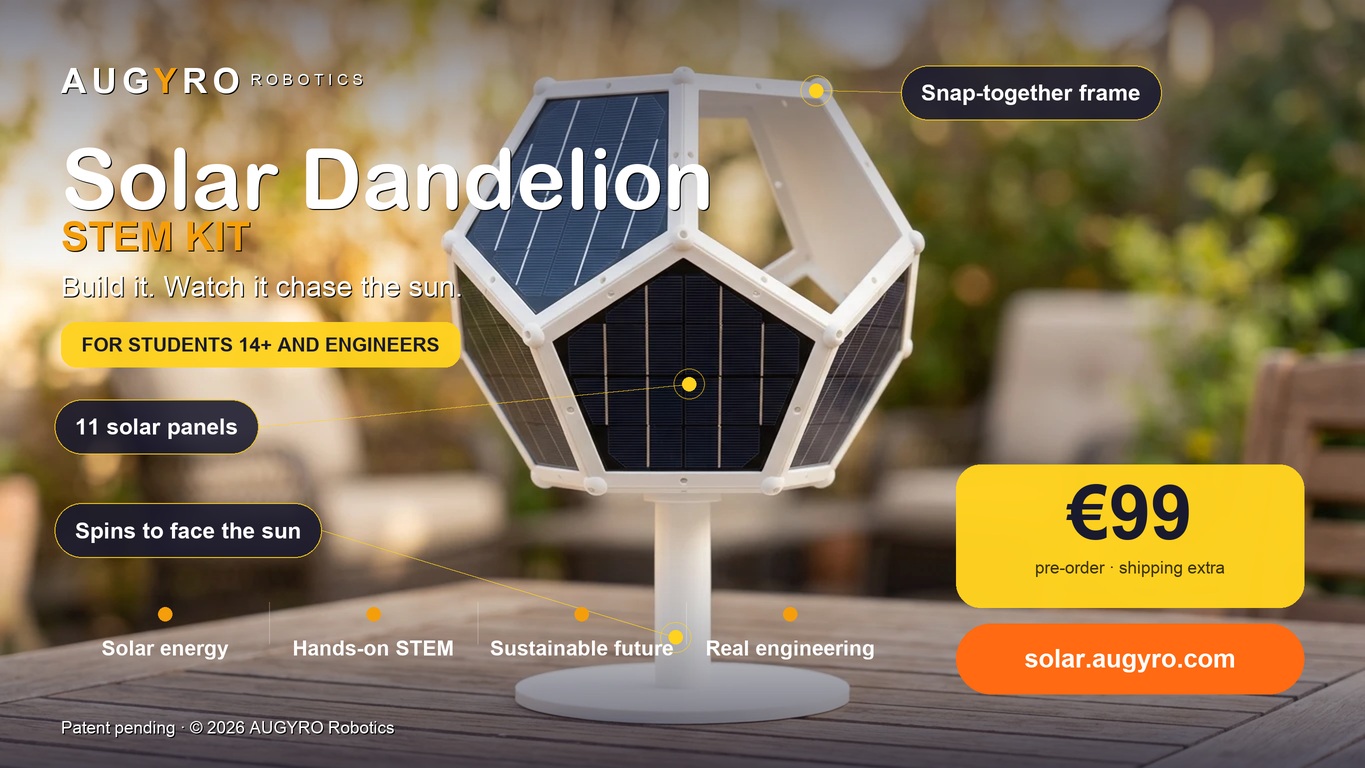
The AR app
Point your iPad at it and run the experiments
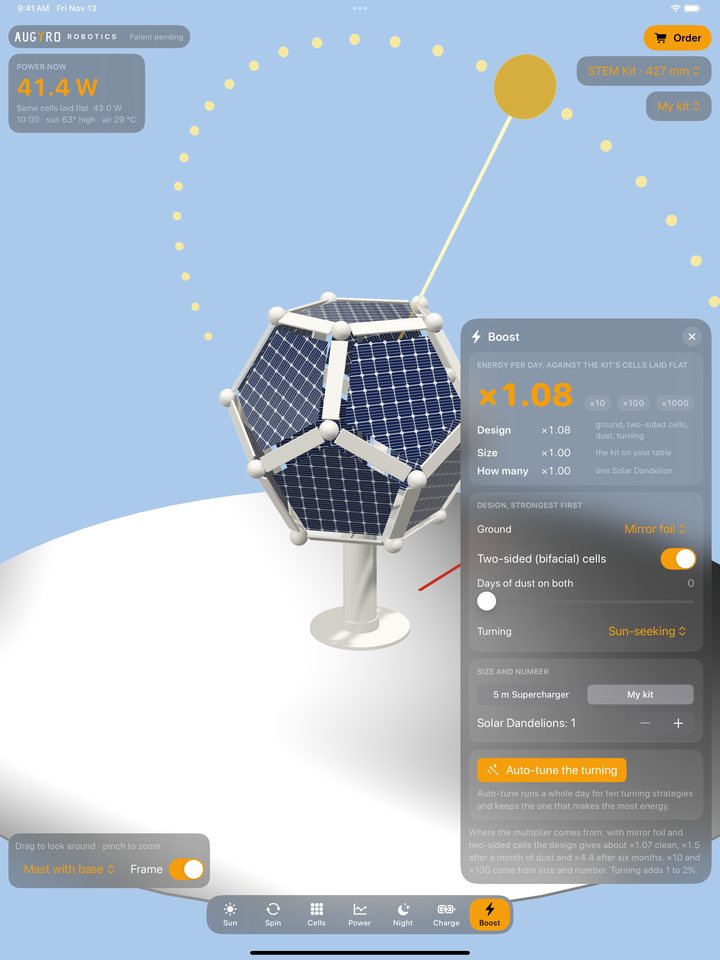
The Solar Dandelion app is free and on the App Store now, so you can try every experiment in its studio view while your kit is being made.
- Move the sun through the day and the seasons
- See which faces make the most power, and how hot they get
- Compare it with the same panels laid flat
- Switch to night and watch the faces open to catch the wind
Get the app on the App Store ›What you learn
Four subjects in one build
GeometryWhy twelve pentagons close into a solid, and the angle each corner needs.
Solar powerHow the sun's height and direction change what a panel makes.
ElectricityVolts, amps and watts, measured on your own charger.
Wind energyHow a turning frame becomes electricity through a dynamo.
Timeline
Where we are
- Frame designed and printedThe 43 cm frame is real: printed on our own machines and assembled by hand.
- AR app releasedFree on the App Store for iPad.
- Now: early adopter pre-ordersThe first batch is 100 kits.
- Batch printing, kitting and testingEvery kit's electronics are tested before it is boxed.
- March 2027: first kits shipOur honest estimate, sent in the order the pledges came in.
Risks and challenges
What could go wrong, said plainly
We are a small team making a first batch. March 2027 is an estimate, not a promise: printing 100 frames, sourcing panels and testing electronics can each slip by weeks. If the date moves, every backer hears from us first.
3D-printed parts show fine layer lines and small colour differences between batches. That is how they are made, not a fault. The electronics are not waterproof, so the kit comes indoors when it rains.
You are never stuck. Until your kit ships you can cancel for a full refund, for any reason, from the order help page.